Cruise Terminal 30

- LocationQuébec (Province)
- ClientPort de Québec
- year2020
- PHOTOStéphane Groleau
A refined and luminous gateway to the waterfront.
Contemporary, understated, and timeless, the architecture of Cruise Terminal 30 draws inspiration from the maritime and industrial landscape of the Port of Québec. Conceived as both an efficient transportation hub and a distinctive architectural landmark, the terminal responds to the logistical demands of cruise operations while establishing a strong presence along the city's waterfront.


The terminal is organized around two primary operational zones: arrivals and security screening on the ground floor, and departures on the upper level, linked by a central services area. Its layout was carefully designed to optimize passenger circulation, streamline operations, and provide exceptional flexibility. The ground floor is entirely free of columns, maximizing waiting areas, circulation routes, and handling zones for passengers, luggage, taxis, and buses. Suspended canopies and elevated walkways reinforce this fluidity, while the boarding concourse, equipped with sliding doors along its full length, creates a seamless and adaptable connection to the passenger boarding bridge.
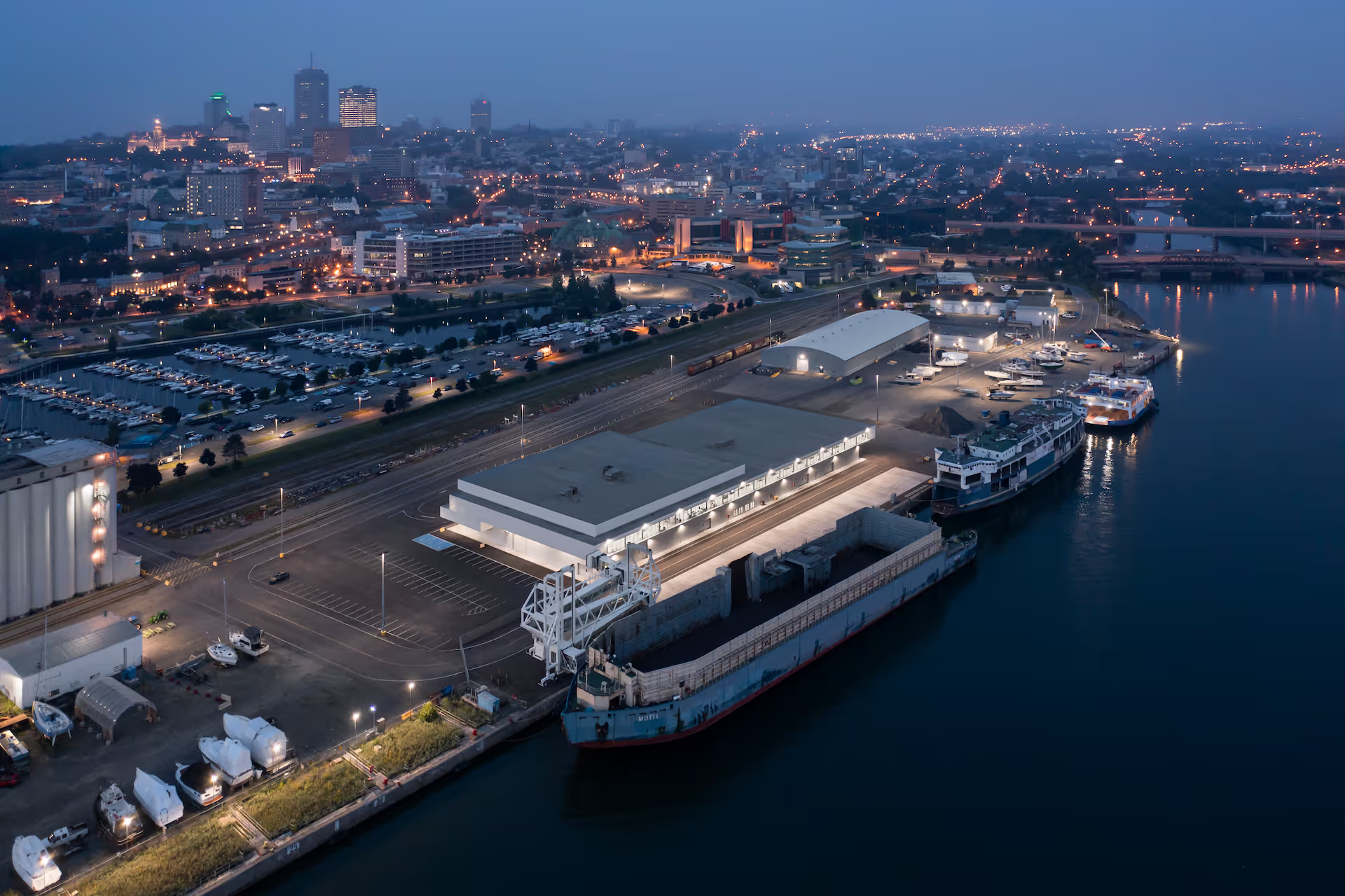


The architectural envelope expresses the spirit of the site through a delicate perforated steel screen whose circular pattern evokes reflections on the St. Lawrence River, the movement of waves, drifting mist, and the portholes of ocean liners. Its ever-changing interplay of light and shadow animates the building during the day, while transforming it into a luminous beacon after sunset. The project also contributes to the revitalization of a strategic industrial site near Bassin Louise and downtown Québec City, integrating sustainable design strategies such as optimized solar control, protective canopies, and measures to reduce the urban heat island effect. At the intersection of infrastructure, architecture, and landscape, Cruise Terminal 30 successfully combines operational efficiency, user comfort, and a strong maritime identity.